
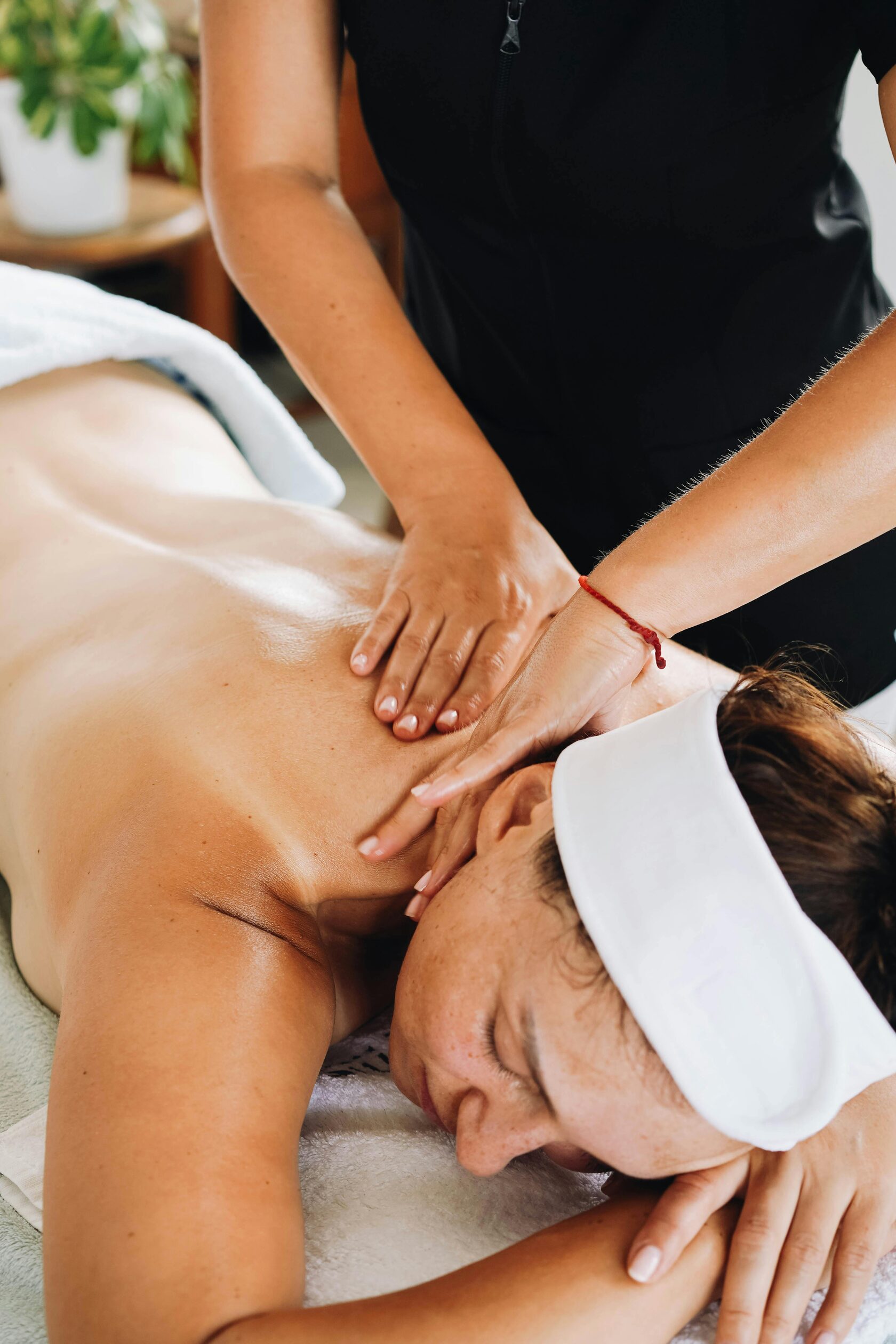
Stress, breathing and a puffy face: a 3-minute reset
You slept eight hours and still look exhausted. Your jaw is tight, your shoulders are up, your face is swollen. The cause might not be your skin at all, but the way stress changes how you breathe.
Stress lives in your face
Under stress, your body switches to "fight or flight". Shoulders rise, the jaw tightens, the brow knits, and breathing becomes short and high in the chest. That's useful for a few minutes. When it lasts for weeks, it shows: a face that looks tense, tired and puffy, even after rest.
Why shallow breathing makes you puffy
Lymph, the fluid that drains your tissues, has no heart to pump it. One of its main engines is your diaphragm, the large muscle under your lungs. Every deep breath into the belly changes the pressure in your chest and abdomen and helps lymph move up and out.
When you breathe shallowly, high in the chest, the diaphragm barely moves. Add a tight neck and clenched jaw that squeeze the face's drainage route, and fluid stays where it is: under the eyes, along the jaw.
The 3-minute reset
Do this in the morning, at your desk, or before bed. No tools needed.
1. Box breathing (1 minute). Sit or lie comfortably. Breathe in through your nose for 4, hold for 4, breathe out for 4, hold for 4. Four rounds. Let the belly rise, not the shoulders.
2. Unclench (30 seconds). Lips together, teeth apart, tongue resting on the roof of your mouth. Let your jaw hang heavy. Drop your shoulders away from your ears.
3. Open the exit (30 seconds). With flat fingers, stroke gently from behind your ears down the sides of your neck to your collarbones, 10 times. Very light pressure.
4. Drain the face (1 minute). From the centre of your forehead, glide outwards to the temples. From the nose, under the cheekbones to the ears. From the chin, along the jaw to the ears. Then down the neck again. Light, like stroking a cat.
That's it. Do it daily for a week and notice how your face looks in the morning.
When a routine isn't enough
Home routines help maintain. But tension that has built up for months, in the neck, jaw and the fascia around them, usually needs hands that can feel where it sits. A professional lymphatic drainage session works the same principles more deeply: neck first, then jaw, then face, at a slow rhythm that tells your nervous system it's safe to switch off.
If your stress shows up mostly in the jaw, try buccal massage. If you also sleep badly, read Stress lives in your face about scalp and face massage for better sleep.
FAQ
Can breathing really reduce puffiness? It won't replace a massage, but deep belly breathing supports lymph flow and calms the nervous system. Combined with gentle self-massage, many people see a less puffy face in the morning.
How often should I do the routine? Daily, ideally in the morning. It takes three minutes.
Is it safe for everyone? The routine is gentle. If you have a medical condition affecting circulation, the heart or lymph nodes, check with your doctor first.
Lymphatic drainage at 360°FACE
More articles
- Clenched jaw, sore temples? Your face might be holding your stress
- Laptop all day, shoulders up to your ears?
- Your face looks tired, even after a good night's sleep?
- Can face massage really make you look younger?
- Puffy eyes in the morning, dark circles all day?
- Skin after 45: what changes in menopause, and what you can do
- Neck lines and a softer jawline: what you can actually change
- Dull, tired skin: how to bring back your glow
- How often should you get a face massage?
- Stress lives in your face: scalp and face massage for calm and better sleep
- Lymphatic drainage: what it really does (and what it doesn't)
- Fascia: the forgotten tissue behind a puffy, tired face
- Lymphatic drainage or facial lifting massage: which one do you need?
Where to find us
Main studio (Parede): Rua Almeida Garrett 112B, Rana, 2785-344 São Domingos de Rana · Directions
Lisbon studio: Rua Azedo Gneco 48B, 1350-036 Lisboa (Campo de Ourique) · Directions
Phone / WhatsApp: +351 915 311 522 · 360face.portugal@gmail.com